
Poison / Toxins in pets
Common Pet Toxins Every Pet Owner Should Know About
Most pet poisonings do not happen because someone was careless. They happen during normal, everyday life.
A dropped pill. A piece of chocolate left on a counter. Fertilizer tracked through the yard. A sugar-free snack in a backpack. A vape cartridge left within reach. Many substances that are harmless — or only mildly dangerous — to humans can become serious emergencies for pets.
One of the biggest challenges with pet toxins is that symptoms are not always immediate. Some pets may seem normal for hours before showing signs of distress, while others can decline rapidly. Quick recognition and fast action can make a major difference in outcome.
Common Household Pet Toxins
Some of the most common toxins seen in veterinary emergencies include:
Chocolate
Xylitol or “Birch Sugar” (found in sugar-free gum, candy, peanut butter, and baked goods)
Grapes and raisins
Alcohol
Marijuana products and edibles
Human medications (Advil, Tylenol, antidepressants, ADHD medications, etc.)
Rodent poisons
Fertilizers and pesticides
Essential oils
Nicotine and vape products
Certain plants such as lilies, sago palms, tulips, and daffodils
Many owners are surprised to learn that even “natural” products can be dangerous. Essential oils, herbal supplements, and homemade remedies are not automatically safe for pets.
Cats and Dogs React Differently
Toxins affect species differently. Something relatively mild for a dog may be extremely dangerous for a cat.
For example:
Lilies can cause severe kidney failure in cats.
Acetaminophen (Tylenol) is especially toxic to cats.
Xylitol can rapidly cause life-threatening low blood sugar in dogs.
This is why pet owners should never rely solely on internet advice or wait to “see what happens” after exposure.
Signs of Possible Poisoning
Symptoms can vary depending on the toxin, but some common warning signs include:
Vomiting or diarrhea
Excessive drooling
Tremors or seizures
Difficulty breathing
Weakness or collapse
Disorientation
Pale gums
Excessive thirst
Sudden lethargy
If a pet is showing symptoms after a possible exposure, pet owners should immediately contact their veterinarian, emergency veterinary hospital, or a professional poison resource such as the ASPCA Animal Poison Control Center or the Pet Poison Helpline.
Why Calling the Poison Hotline Early Matters - 24/7 instant answers
Many pet owners hesitate because these services charge a one-time consultation fee (~$85). However, that fee often gives owners direct access to veterinary toxicology professionals who specialize specifically in poison exposures.
A common misconception is that emergency veterinarians automatically have all toxicology information readily available in-house. In reality, many veterinary clinics and emergency hospitals still contact the same poison hotlines for case guidance and toxicology recommendations. This can sometimes result in both the ER exam fee and the poison hotline consultation fee.
Calling the poison hotline early can sometimes save pet owners significant time, money, and stress. Depending on the toxin and amount exposed, the hotline may be able to recommend safe at-home monitoring or treatment without an emergency visit.
According to the ASPCA, “50–75% of cases can be safely managed at home”.
If emergency care is needed, the consultation fee generally covers ongoing case management for that incident, including follow-up communication between the poison hotline and the treating veterinarian. That means your veterinarian can continue consulting with the toxicology specialists throughout treatment without additional hotline charges for the same case.
The most important thing is not to wait. Early intervention often gives pets the best chance for a positive outcome.
ASCPA - (888) 426-4435
Pet Poison Hotline - (800) 213-668
Information to Have Ready Before Calling
The hotline will likely ask for:
Breed
Age
Weight
Sex/spay-neuter status
Medical conditions
Current medications
What the pet was exposed to
Approximately how much was consumed
When the exposure happened
Current symptoms
If possible, have the product packaging or ingredient label nearby during the call.
Important: Do Not Induce Vomiting Unless Directed
One of the most common mistakes pet owners make is attempting home remedies too quickly.
Do not induce vomiting, give milk, food, oils, activated charcoal, or hydrogen peroxide unless specifically instructed by a veterinarian or poison professional. Some substances can cause significantly more damage when vomited back up.
Prevention Is Easier Than Treatment
Many toxin exposures are preventable with awareness and planning. Pets explore the world with their mouths, noses, and paws. Creating a safer environment is part of responsible pet ownership.
Preparedness also matters. Pet owners should keep emergency veterinary numbers saved in their phone, know the location of their nearest emergency veterinary hospital, and maintain updated emergency information sheets for each pet.
You do not need to live in fear of every household item. But understanding the most common risks — and having a plan if something goes wrong — can help protect the animals that depend on us every day.
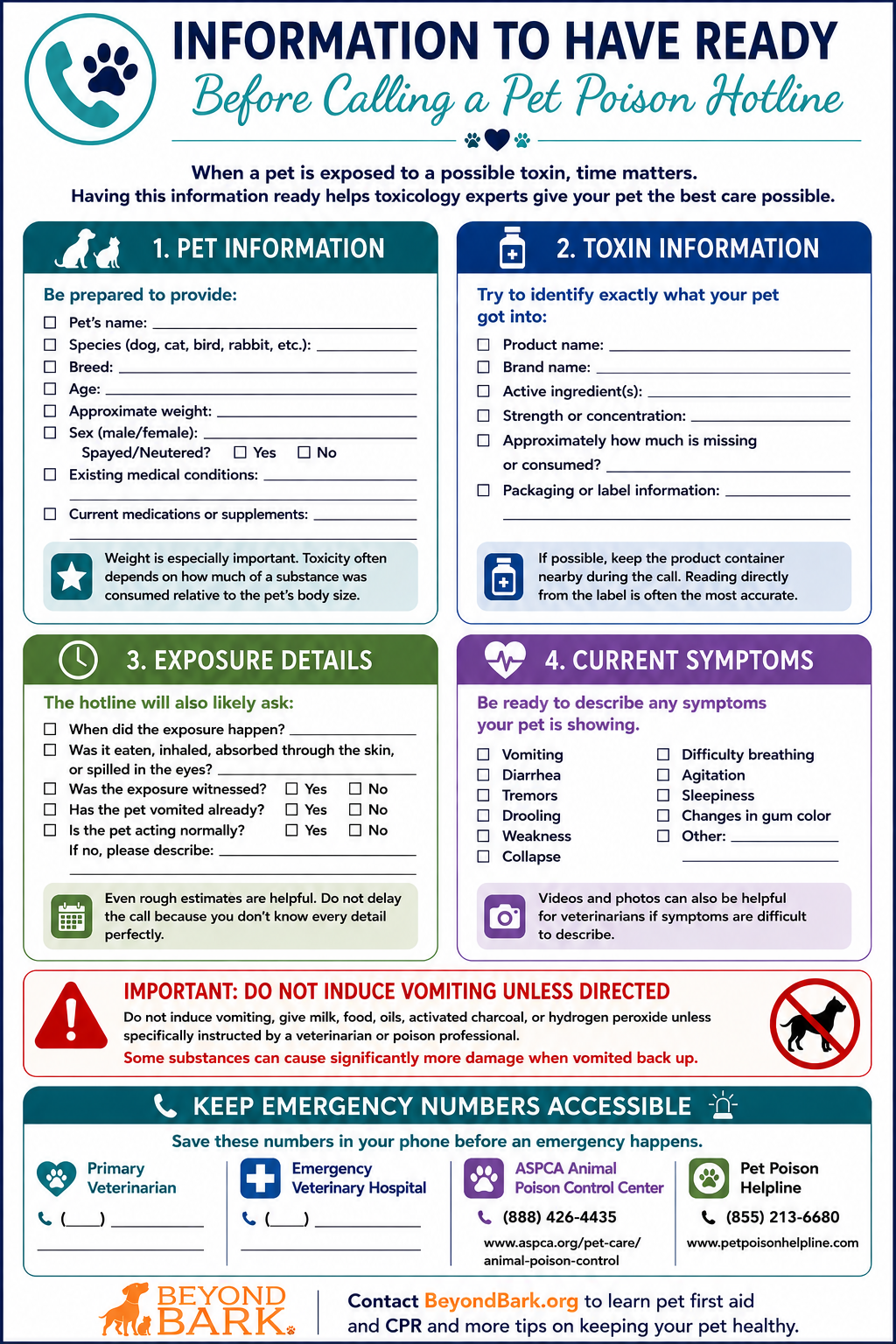
Be ready to call the Pet Poison Hotline when needed. This sheet will help you focus and remain calm.
