
 Image 1 of 1
10 Household Toxins Pet Owners Should Know
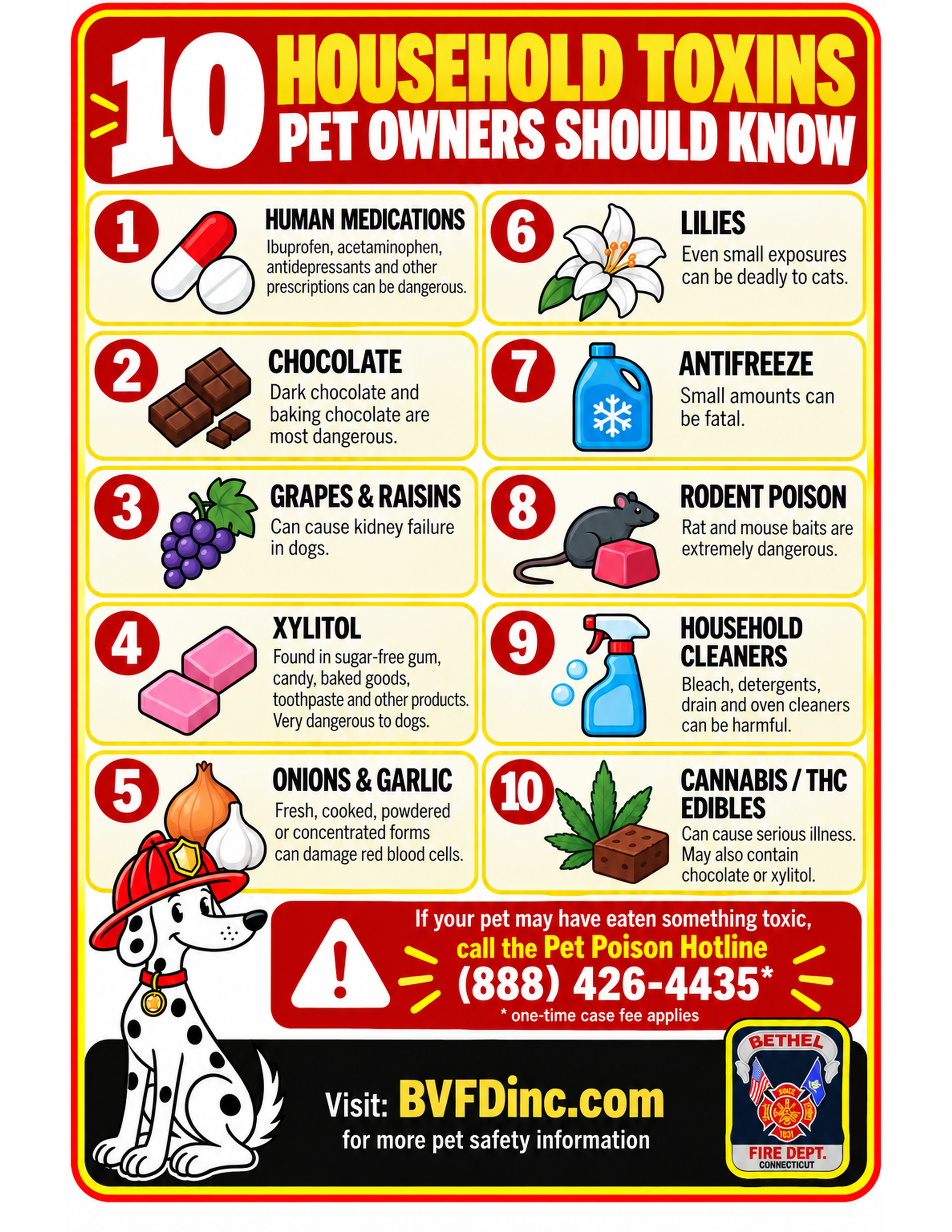
A quick-reference pet safety poster highlighting 10 common household items that can seriously harm dogs and cats, including human medications, chocolate, grapes and raisins, xylitol, lilies, antifreeze, rodent poison, household cleaners, onions and garlic, and cannabis/THC products.
Designed to be easy to scan and print, this handout also includes the Pet Poison Hotline number so pet owners know where to turn if they suspect a toxic exposure. It works well as a pet first aid handout, staff training resource, client education sheet, or community pet-safety display.
Disclaimer: This poster was originally designed for the Bethel Volunteer Fire Department Pet Safety Program and is being shared by Beyond Bark as a free educational resource. It is intended for general pet-safety education and is not a substitute for veterinary advice, diagnosis, or treatment. If you believe a pet may have ingested or been exposed to a toxic substance, contact the Pet Poison Hotline or a veterinarian promptly.
10 Household Toxins Pet Owners Should Know
A quick-reference pet safety poster highlighting 10 common household items that can seriously harm dogs and cats, including human medications, chocolate, grapes and raisins, xylitol, lilies, antifreeze, rodent poison, household cleaners, onions and garlic, and cannabis/THC products.
Designed to be easy to scan and print, this handout also includes the Pet Poison Hotline number so pet owners know where to turn if they suspect a toxic exposure. It works well as a pet first aid handout, staff training resource, client education sheet, or community pet-safety display.
Disclaimer: This poster was originally designed for the Bethel Volunteer Fire Department Pet Safety Program and is being shared by Beyond Bark as a free educational resource. It is intended for general pet-safety education and is not a substitute for veterinary advice, diagnosis, or treatment. If you believe a pet may have ingested or been exposed to a toxic substance, contact the Pet Poison Hotline or a veterinarian promptly.