The protocol for the incident every pet care owner fears most
A dog going missing is the fastest way a good day turns into a lawsuit, a canceled contract, or a call you weren't prepared for. This is the exact protocol Beyond Bark ran at scale — 32+ pages, built to be trained into your staff and run by you when it counts.
What your staff trains on:
A first-actions quick-reference card — exactly what to do in the first, highest-stakes minutes, split by whether the dog is still in sight or gone
Active-pursuit guidance — what actually works to recover a scared dog, and the instincts that make it worse
A staged search protocol for when the dog is out of sight
Setting-specific notes for a walk, a yard or home, transport, and boarding
A documentation checklist — voice note, photos, timeline, security camera flags — so nothing gets lost in the moment
What you run:
Word-for-word scripts for the hardest calls: notifying the owner, coordinating an expanded search, verifying a sighting, handling a third party who finds the dog
Recovery logistics — confirming a find, setting a humane trap, reuniting safely with the owner
Insurance and liability guidance, including exactly what to say — and never say — if the dog is hurt, killed, or not recovered, plus a claim-file checklist
Public visibility guidance — when to lean into a public search, and how to handle it if the story turns negative
A ready-to-use incident report form
A decision tree for what changes afterward: gear, procedure, property, or staff coaching
Staff support guidance for after a hard search
A manager checklist tying every step together
A chain-of-command template, so a search never stalls waiting on one person
Includes the companion staff quick-reference card your team keeps on hand in the field.
The protocol for the incident every pet care owner fears most
A dog going missing is the fastest way a good day turns into a lawsuit, a canceled contract, or a call you weren't prepared for. This is the exact protocol Beyond Bark ran at scale — 32+ pages, built to be trained into your staff and run by you when it counts.
What your staff trains on:
A first-actions quick-reference card — exactly what to do in the first, highest-stakes minutes, split by whether the dog is still in sight or gone
Active-pursuit guidance — what actually works to recover a scared dog, and the instincts that make it worse
A staged search protocol for when the dog is out of sight
Setting-specific notes for a walk, a yard or home, transport, and boarding
A documentation checklist — voice note, photos, timeline, security camera flags — so nothing gets lost in the moment
What you run:
Word-for-word scripts for the hardest calls: notifying the owner, coordinating an expanded search, verifying a sighting, handling a third party who finds the dog
Recovery logistics — confirming a find, setting a humane trap, reuniting safely with the owner
Insurance and liability guidance, including exactly what to say — and never say — if the dog is hurt, killed, or not recovered, plus a claim-file checklist
Public visibility guidance — when to lean into a public search, and how to handle it if the story turns negative
A ready-to-use incident report form
A decision tree for what changes afterward: gear, procedure, property, or staff coaching
Staff support guidance for after a hard search
A manager checklist tying every step together
A chain-of-command template, so a search never stalls waiting on one person
Includes the companion staff quick-reference card your team keeps on hand in the field.

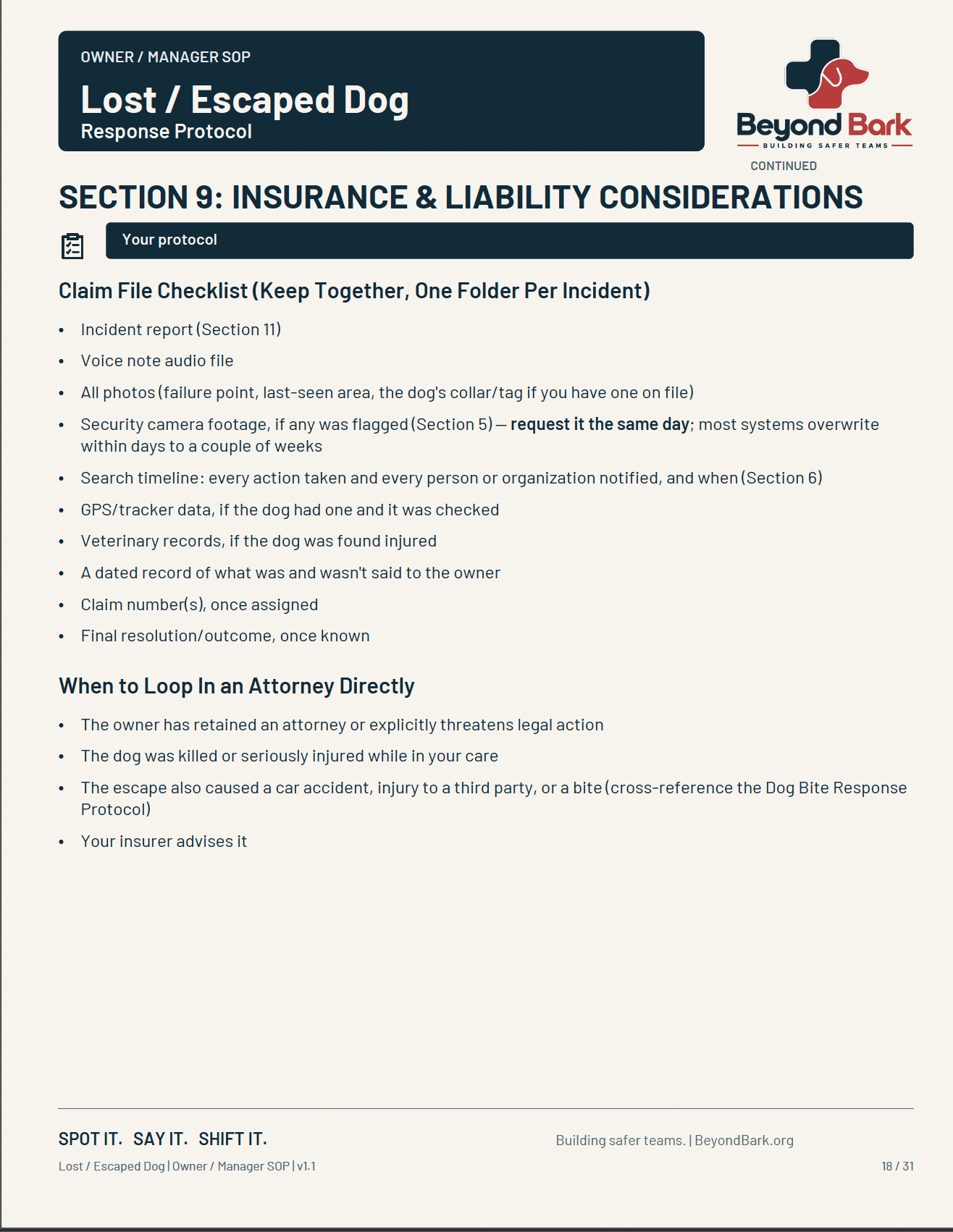 Image 1 of 7
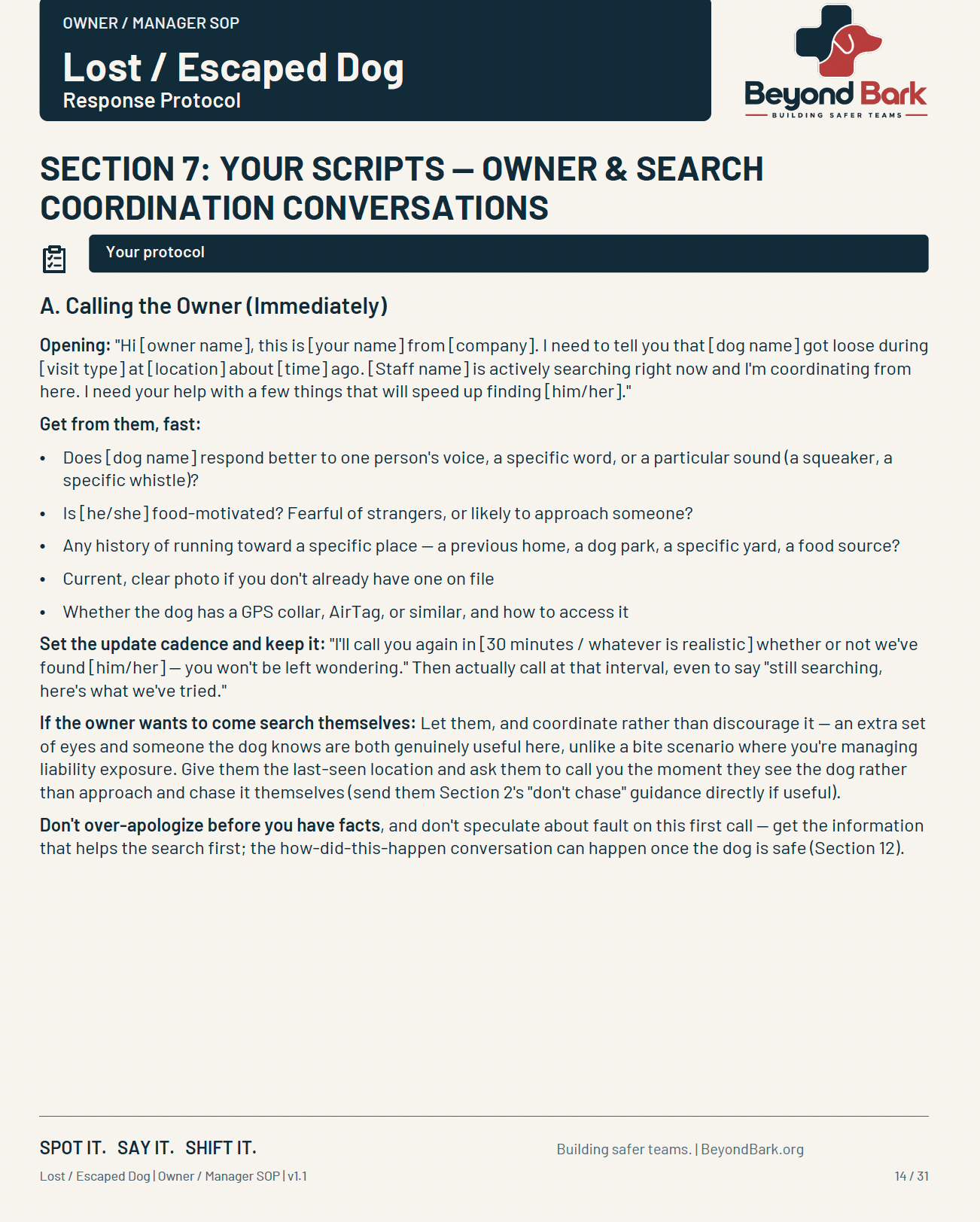 Image 2 of 7
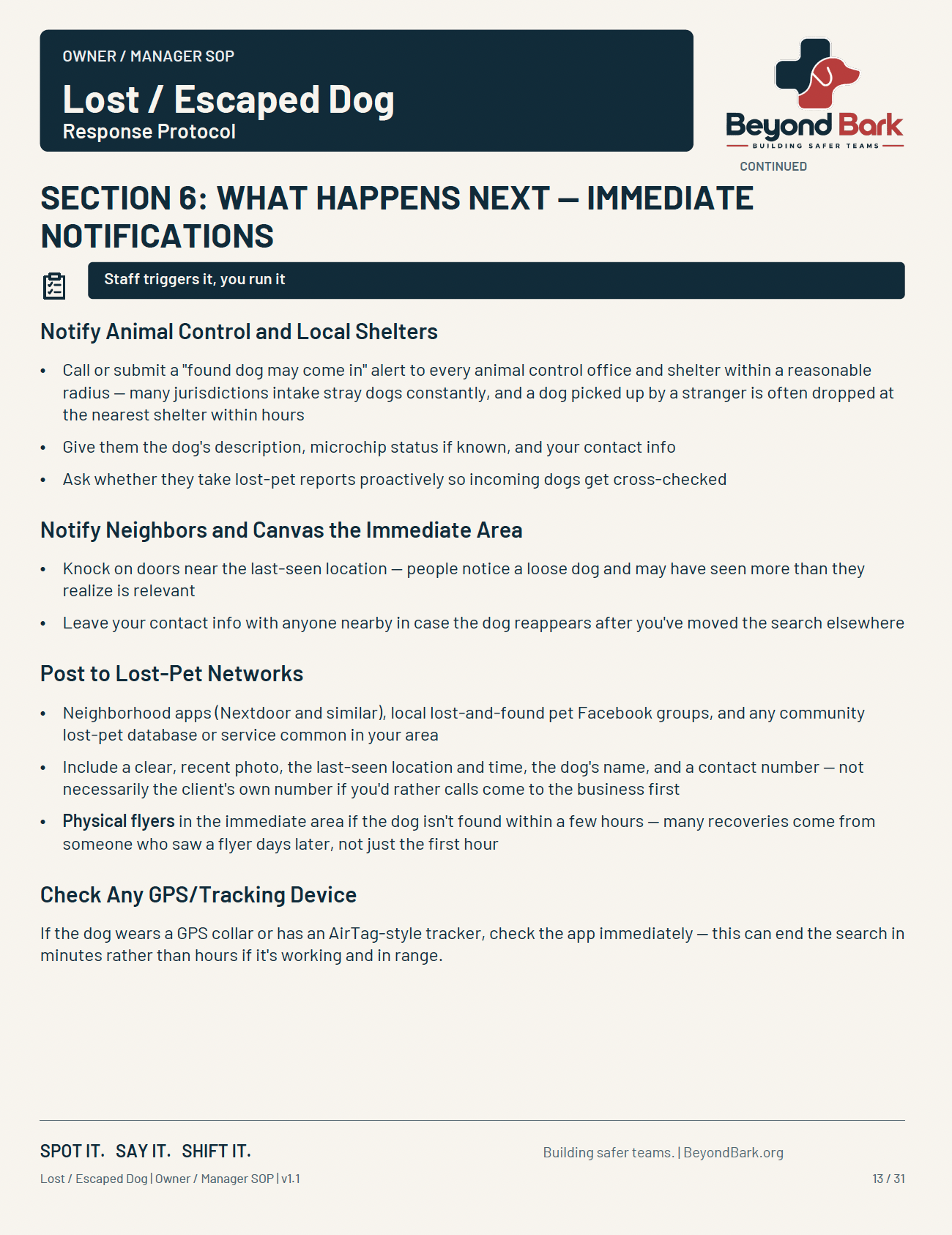 Image 3 of 7
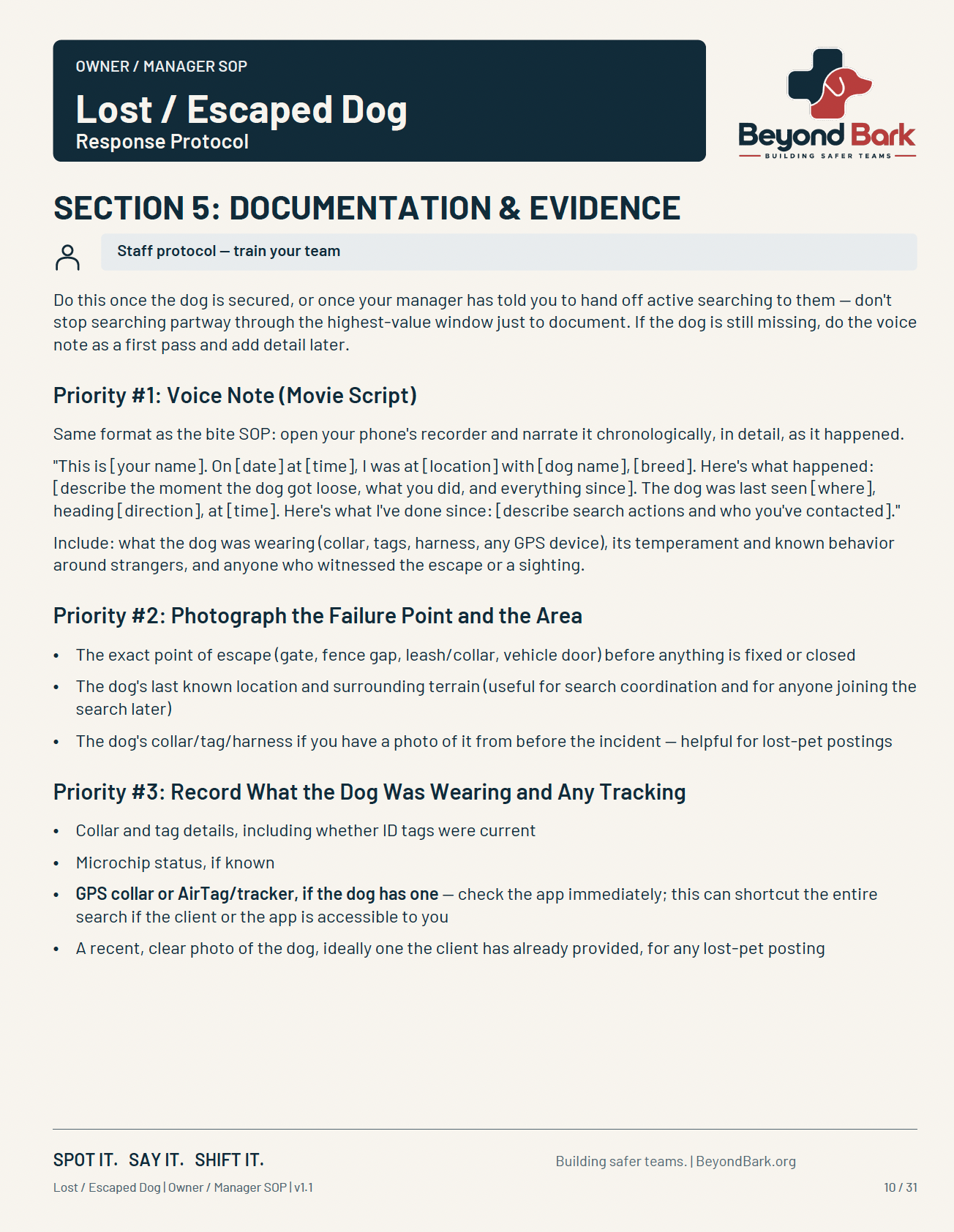 Image 4 of 7
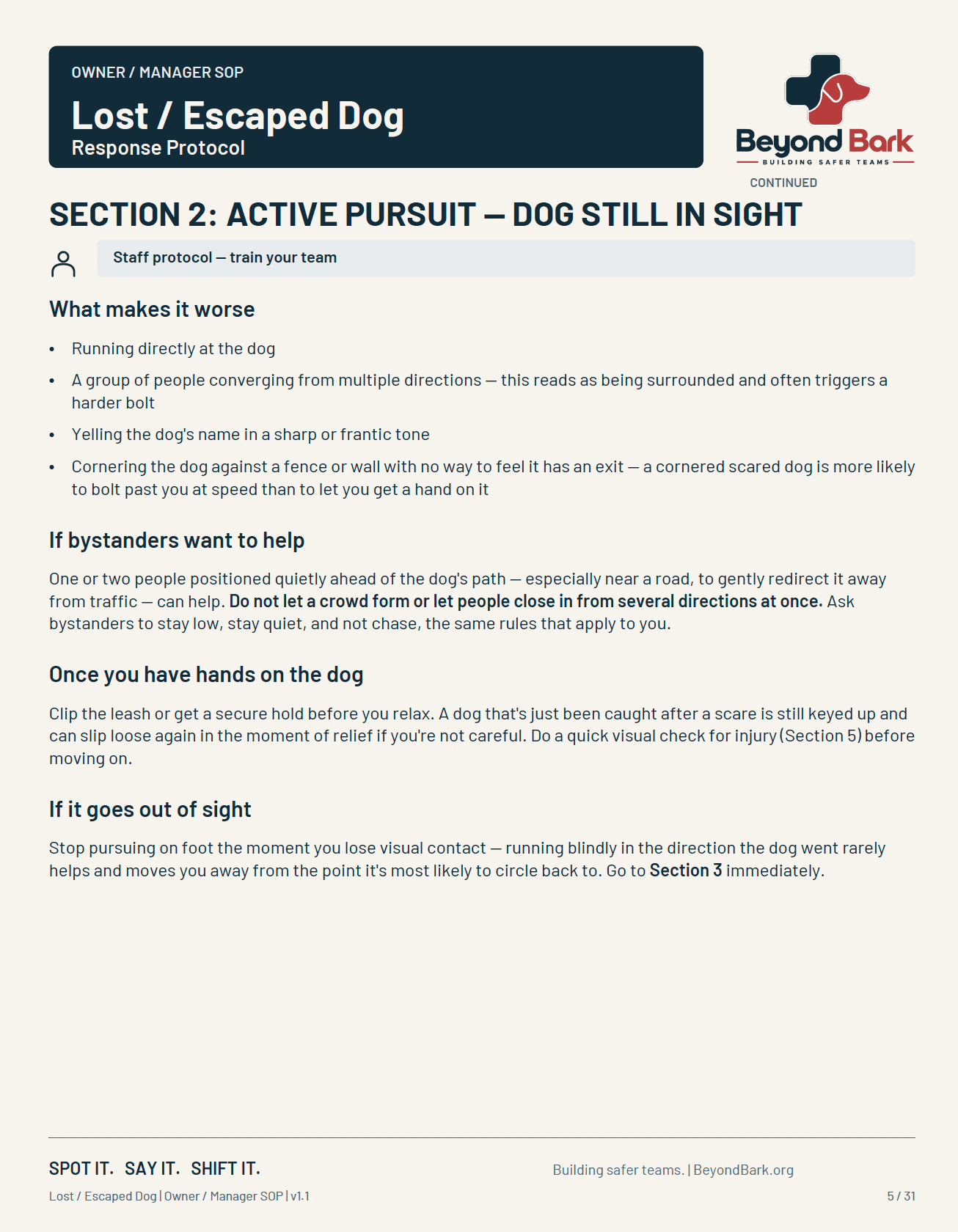 Image 5 of 7
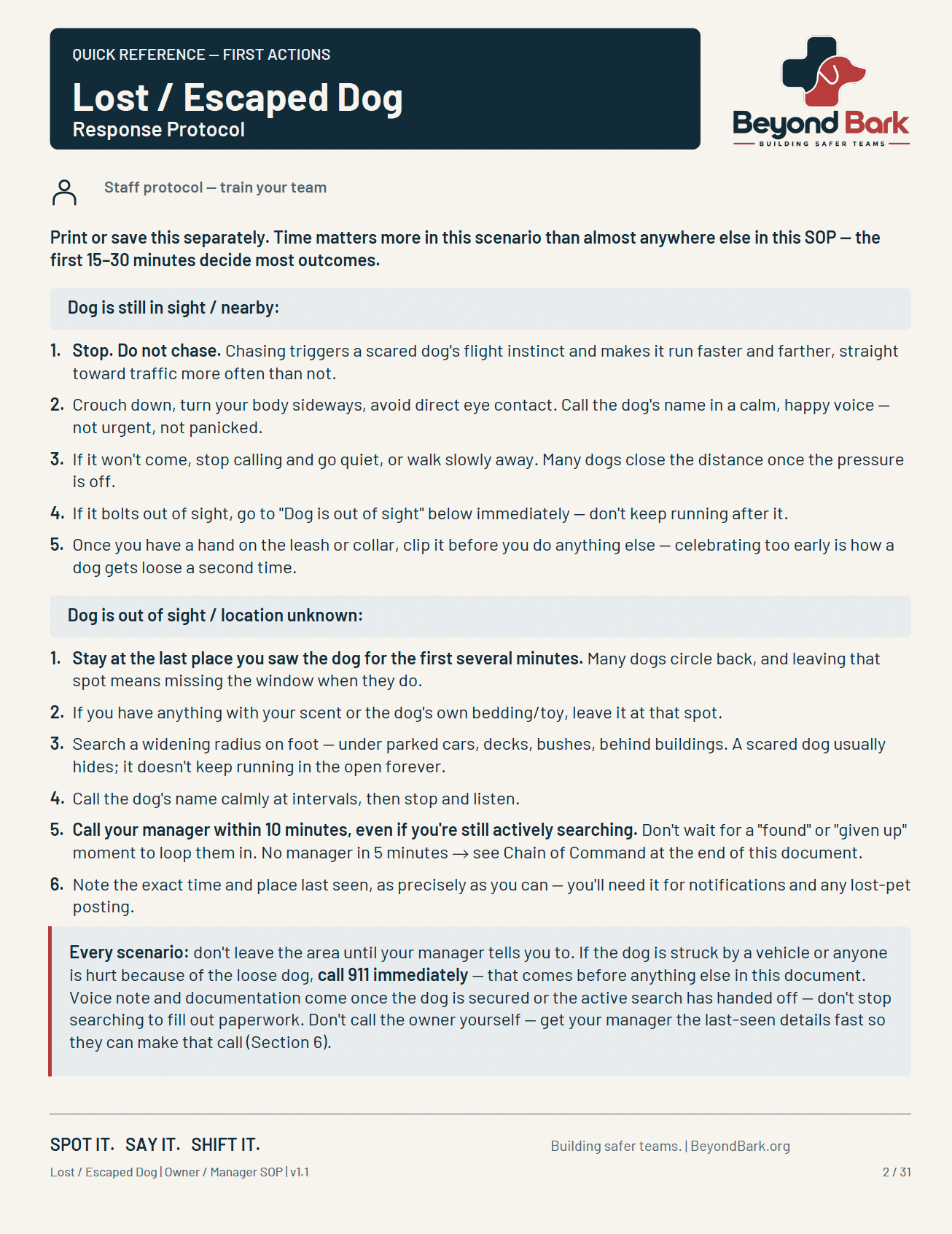 Image 6 of 7
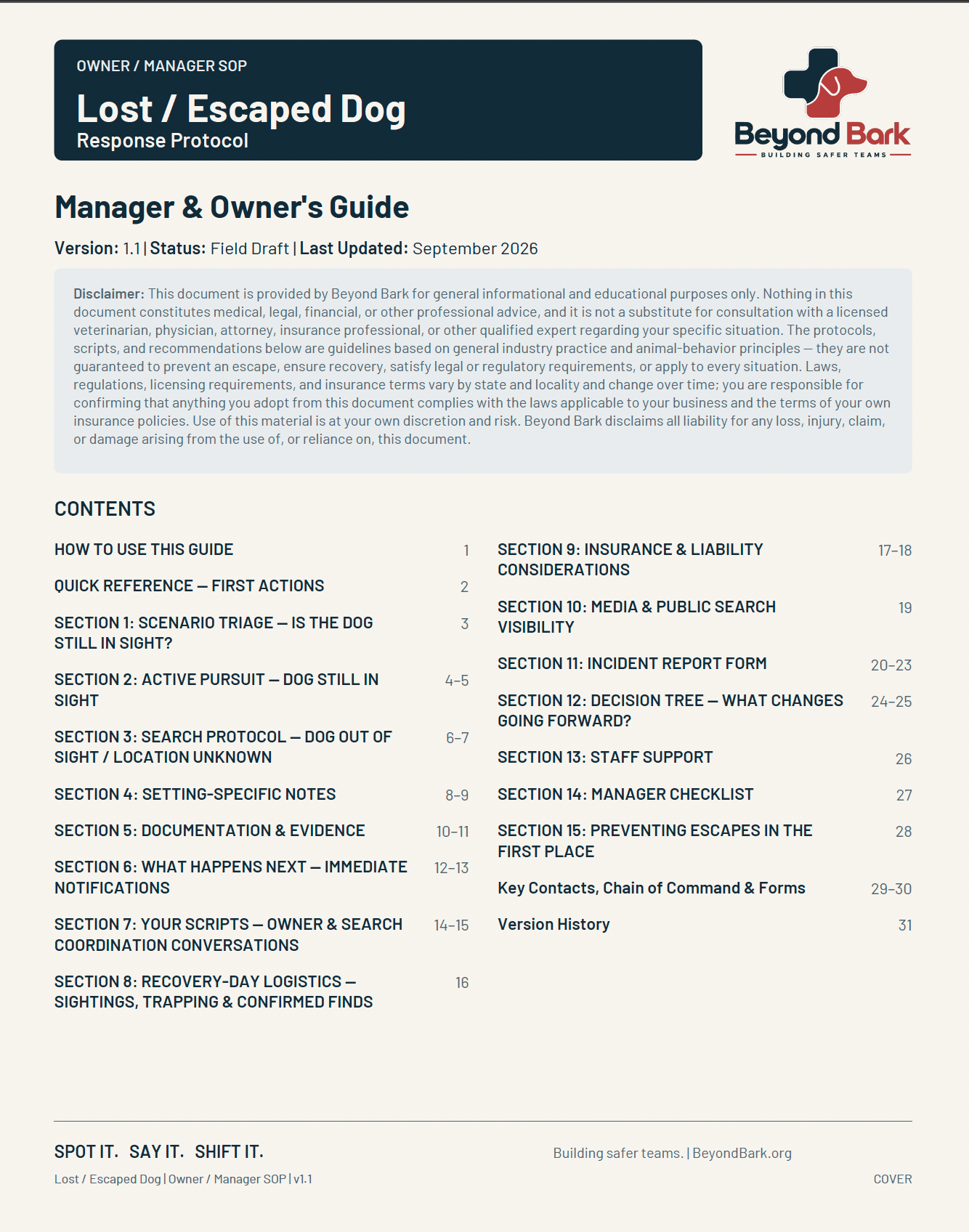 Image 7 of 7